
Masala / Spices Processing Units

A masala machine plant typically includes various machines like spice roasters, sifters, blenders, and pulverizers, all working together to process spices into usable powders. These plants can range from small, semi-automatic setups to large, fully automated industrial units. They are designed to handle different types of spices, including chili, turmeric, coriander, and cumin, ensuring efficient and consistent powder production.
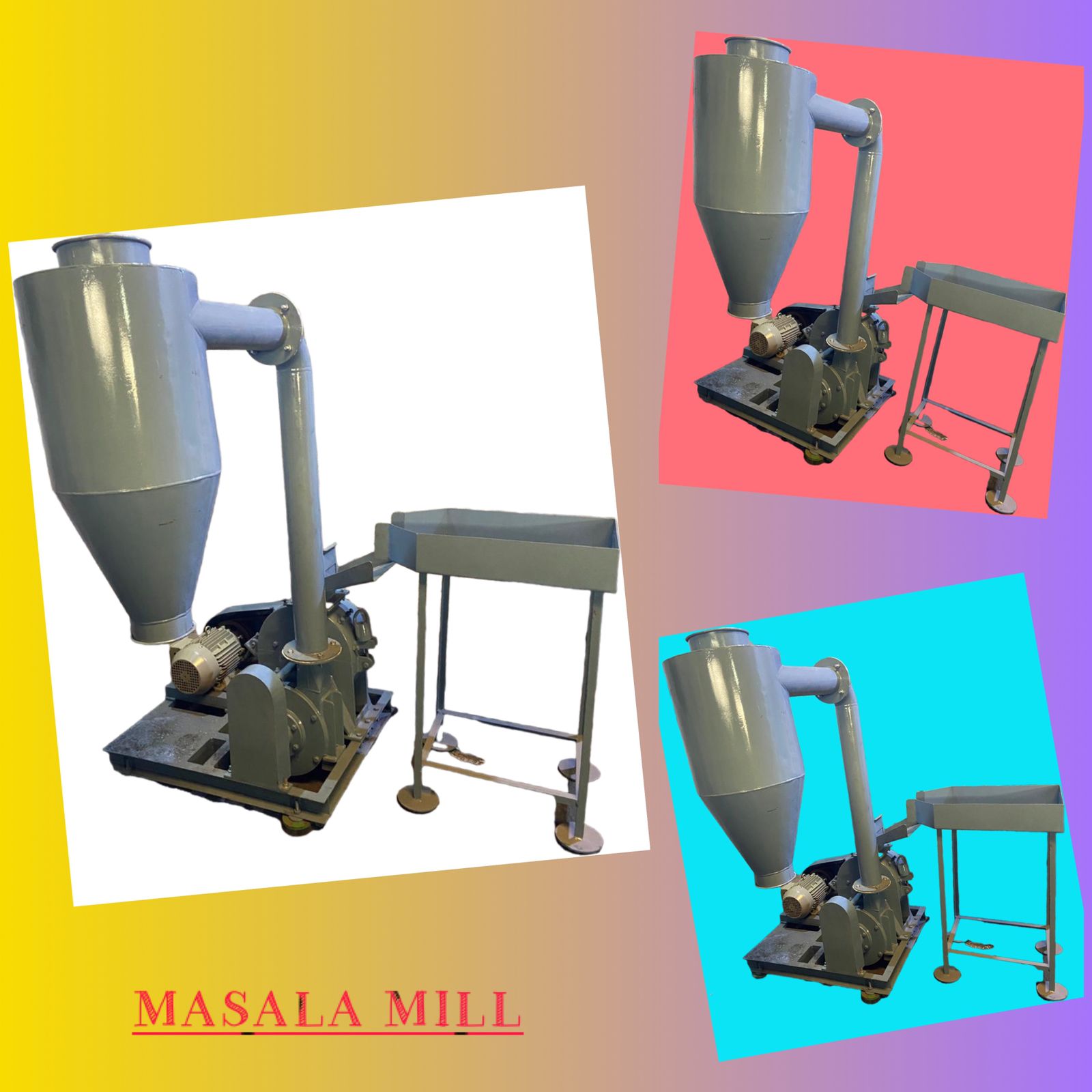
Masala / Spices Processing Units

Main Components of a Masala making Plant:

  • Roasting Machine: Used to roast spices, enhancing their flavor and aroma.

  • Auto feeder system: Used to feed material in milling machine by screw conveyor, elevator, linear auto feeder.

  • Pulverizer / masala mill /spice machine/hammer mill: Grinds the spices into fine powder. This can be a single-stage or multi-stage process, depending on the required fineness.

  • Air Blower / Cyclone separator: Helps in cooling and conveying the powdered spices in cyclone or storage silo. Cyclone is used to density separator in spices

  • Rotary Air Lock Valve: Controls the air flow of material in the system.

  • Vibro Sifter/Sieving machine: Sieving machine is separates the ground spices based on particle size, ensuring a uniform powder.

  • Ribbon Blender: Ribbon blenders are used for Mixes different spices to create customized masala blends.

  • Dust collector- Dust collectors are crucial in the spices industry to manage airborne dust generated during various processes like grinding, mixing, and packaging. These systems help maintain a clean and safe working environment by capturing dust particles, preventing contamination, and reducing health and safety hazards.

Different Types of Masala making Machine Plants
  • Commercial Spice Grinder Machine: A specific type of machine for grinding various types of blending, mix raw spices into powder, with varying horsepower (HP) and output capacity.

  • Semi-automatic machine/plants: semi -automatic machines involve manual handling of some processes, such as loading and unloading materials.

  • Fully Automatic: These plants automate most of the processing steps, requiring minimal manual intervention

Important considerations
  • Capacity: Plants are available in various capacities, from 50 kg/hr to over 1000 kg/hr.
  • Materials: Stainless steel is commonly used for parts that come into contact with food to ensure hygiene and prevent corrosion.
  • Automation: Automation is crucial for consistency, speed, and minimizing dust and contamination.
  • Regulations: In India, businesses need an FSSAI license to comply with food safety and quality standards.